
Like many people who have a country home, we use ours for relaxing, grilling kebabs, and growing tomatoes, cucumbers and other vegetables in a small garden. The only problem is watering. In the summer heat, if we miss a watering, the tomatoes and other crops dry out. The soil cracks in the heat, tearing the roots, and the plants die. So we decided to install automatic drip irrigation at the country home.
In this and several subsequent articles, I decided to share my experience with this project. I started the work in the summer of 2015. My photo report and descriptions of the work are below.
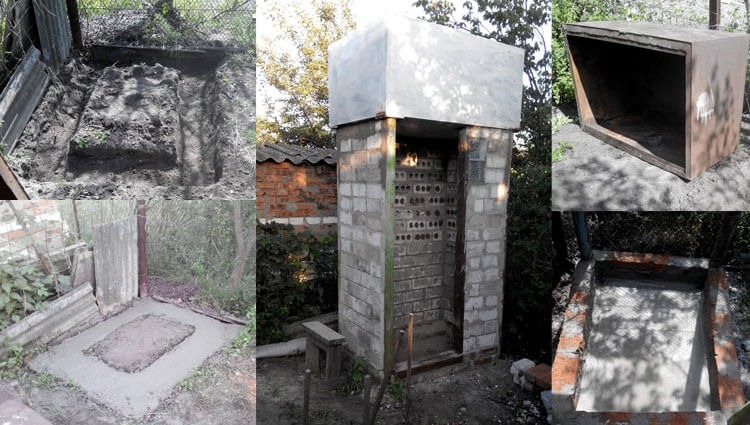
We bought a second-hand steel tank holding a little over a cubic metre. We decided to pump water into it through a coarse filter from the river just beyond the fence.
We made a small strip foundation with metal plates at the corners. I laid reinforcement around the perimeter:

I poured the foundation with a cement-and-sand mix, using a ratio of roughly one to three:

The tank was second-hand and not in very good condition: it was rusty, with holes through the bottom and a side. I bought an angle-grinder attachment to clean it:


I also bought safety goggles and a respirator to protect my lungs, and started cleaning:


By the end of the job, the angle-grinder brush was completely worn out:

I had not thought to put on a bandana or any other head covering, so I got rather dirty and went into the river to wash off:

I painted the tank and lid white because that was the paint I had available:


We welded posts to the tank, raised it on the posts, set it on the foundation, and welded it to the metal angles embedded in the foundation. I made a plinth from two courses of red brick, ran a 50 mm plastic water pipe through for the shower drain, and another identical pipe higher up for the water inlet from the river and the outlet to the irrigation system. After putting down scrap metal as reinforcement, I poured a cement-and-sand floor screed using one part cement to 3 parts sand:


With round pipes at the corners, I could not make the corners out of brick. Building around the outside would use more materials, and I wanted to keep costs down. I decided simply to lay the brick courses between the pipes and weld metal strips to the pipes between the courses to tie the walls in:


To save materials, I laid the bricks on edge. I had built veranda walls this way when I was just out of school, and this type of brickwork had proved adequately strong:


Here are a few photos of the welded steel strips tying the brick walls to the posts:


I bought glass blocks to build into the walls as windows so there would be enough light inside:

An overall view of the tank and completed walls. The door has not yet been hung, and I have not filled all the holes in the bricks:


By the end of the summer of 2015, a significant problem had emerged: the river level had fallen very low, making it difficult to pump water into the tank.
We decided to have a well drilled in the spring of 2016 and supply the drip irrigation from it, leaving the tank just for the outdoor shower. Naturally, the walls still need plastering inside and outside to give it a proper finish.
Continued:
Making a well pit from materials at hand
DIY drip irrigation at the country home
This was Sergey Lazarenko.
Let us take a short break and watch a video:

Add comment